Best Protein Powder for GLP-1
The best protein is not the most expensive tub with the loudest label. It is the protein you can repeat when appetite is low: easy, tasty, low-friction, and not secretly a dessert drink.
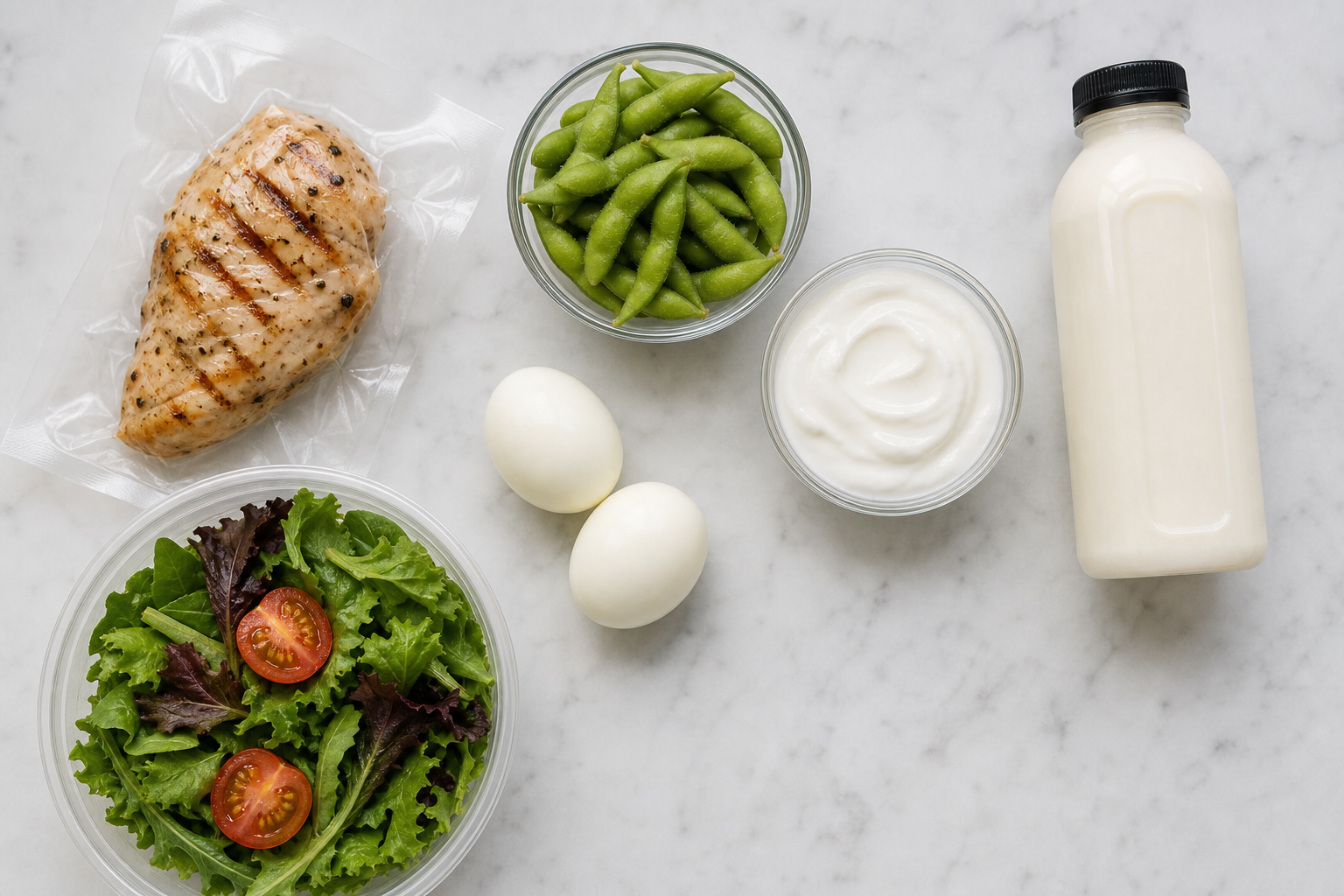
GLP-1 eating can make protein both easier and harder. Easier, because random snacking may drop. Harder, because a small appetite can turn a normal day into coffee, a few bites, and a late snack. That is how people accidentally under-eat protein while thinking they are being disciplined.
The honest reframe: protein is not punishment and it is not bodybuilding culture. It is the anchor that makes smaller meals feel like meals. You do not need to cook. You do need a few repeatable defaults.
How much protein on GLP 1?
How much protein on GLP 1 is the right first question. A practical target for many adults is 25-40 g protein per main meal, or roughly 80-120 g per day. Smaller people may do fine at the lower end. Larger, taller or more active people often prefer the higher end.
Do not turn this into a spreadsheet prison. Use the "two anchors plus one backup" rule: two real protein meals, then one shake, yogurt, bar or convenience-store item if the day gets messy.
Best protein for GLP-1
The best protein for GLP-1 is usually boring and repeatable. It should be easy to finish, easy to buy, and easy to pair with fruit or vegetables so the meal does not become dry.
| Protein pick | Typical protein | Best use |
|---|---|---|
| Greek yogurt or skyr | 15-25 g | Breakfast bowl with berries |
| High-protein milk | 20-30 g | Coffee, oats, emergency snack |
| Ready chicken breast | 25-35 g | Salad, wrap, rice bowl |
| Tuna or salmon pouch | 18-30 g | Wrap, crackers, salad kit |
| Eggs | 12-20 g | No-cook snack with fruit |
| Edamame or tofu | 10-25 g | Plant-based protein plus fiber |
Best protein powder for GLP-1: what to buy
For powder, ignore most of the front label. Check the serving: you want about 20-30 g protein, a taste you actually like, and low added sugar. Whey isolate is often light and mixes easily. Whey concentrate is usually cheaper and creamier. Milk protein can feel more filling. Soy protein works well for a plant-based option. Pea-rice blends can be fine if the texture does not make you dread it.
The bad buy is the powder you only tolerate when blended with half a dessert menu. The best buy is the one you can shake with cold water or milk and move on.
No-cook GLP-1 protein picks
This is where convenience stores help. A 7-Eleven-style day can work surprisingly well: high-protein milk coffee in the morning, Greek yogurt with berries, ready chicken breast with a salad kit, edamame as a snack, and a tuna wrap for dinner. That is not a perfect influencer meal plan. It is better: repeatable food you can buy while tired.
If constipation is the issue, pair this page with does Mounjaro cause constipation. Protein alone is not enough. Protein plus fiber is the move.
Protein swaps that do not feel like dieting
- Swap sweet iced coffee for high-protein milk coffee.
- Swap a pastry breakfast for Greek yogurt, berries and cereal.
- Swap plain noodles for noodles with eggs, tofu or chicken.
- Swap chips for edamame, popcorn plus yogurt dip, or tuna crackers.
- Swap a second bar for a yogurt bowl or protein milk with fruit.
The verdict: use powder as a tool, not the whole identity. Whole-food protein feels better when you can manage it. Powder is the backup that keeps the day from falling apart.
Stop deciding what to eat.
The 711 Diet is the physician-built system: which exact 7-Eleven products to grab, in which combo, at which calorie tier. No cooking, no tracking, no willpower.
Get The 711 Diet Protocol →What is the best protein powder for GLP-1?
The best protein powder for GLP-1 is one you tolerate, enjoy, and can repeat: whey isolate, whey concentrate, milk protein, soy protein or a pea-rice blend. Choose 20-30 g protein per serving and keep added sugar low.
How much protein on GLP 1?
A practical target is 25-40 g protein per main meal, or roughly 80-120 g per day for many adults. Use the lower or higher end based on body size, appetite and activity.
What is the best protein for GLP-1 if I do not cook?
Greek yogurt, high-protein milk, ready chicken breast, tuna, eggs, cottage cheese, tofu, edamame, protein shakes and decent protein bars are the easiest no-cook picks.