How to Lose FUPA
Here is the straight answer. The FUPA is normal subcutaneous fat sitting over your pubic bone. You cannot spot-reduce it. It shrinks when you lose fat overall, and for many people it is one of the last areas to go.
If you searched how to lose FUPA, you have probably seen a wall of "5 moves to blast your FUPA" videos. I want to save you the wasted effort. There is no move that burns fat from one chosen spot, and the area you are worried about is not a flaw. It is normal anatomy that, like the rest of you, stores a layer of fat.
So before the how, the honest part. The good news is that this fat behaves like any other fat on your body: it responds to an overall calorie deficit over time. The catch is that you do not get to pick the order it comes off in, and the pubic area is often near the end of the queue. Once you understand that, the plan gets simpler and a lot less frustrating.
What FUPA actually is
FUPA stands for the fat upper pubic area. The anatomical name for the region is the mons pubis, the soft mound that sits over your pubic bone, just below the lower belly. A pad of fat there is completely normal. Everyone has some, because this is one of the places the body naturally stores subcutaneous fat, the layer that sits between your skin and your muscle.
This matters for one reason: it tells you what you are dealing with. The FUPA is not a separate problem from the rest of your body fat, and it is not a sign that something is wrong. It is the same kind of fat as on your hips, your back or your arms, just in a spot that happens to draw a lot of attention. Treat it as what it is, ordinary fat, and the realistic approach falls into place.
Why targeted moves will not burn it
This is the part the "FUPA workouts" get wrong. You cannot tell your body to take fat off one specific place by exercising that place. That idea is called spot reduction, and it does not work. The research on this is old and consistent: training a muscle hard does not strip the fat sitting on top of it.
Pelvic tilts, leg raises, lower-ab crunches and the rest are fine as movement, and they can build the muscle underneath. But muscle under the fat is not the same as removing the fat. You can have a strong core and still carry a soft pubic pad, because the two live on different layers. If you want the full reasoning, our guide on the spot reduction myth walks through why your body decides where fat comes off, not you.
So when a program promises to "target your FUPA" with a set of exercises, treat that as a signal it is selling against basic physiology. The honest version is less exciting and far more reliable: lose fat across your whole body, and the pubic area comes down with everything else.
Fat or loose skin? The honest distinction
Here is something most articles skip, and it changes the whole plan. What sits over your pubic bone is not always fat. Sometimes it is loose skin, and skin does not respond to dieting.
If you have not lost a lot of weight, what you are seeing is almost certainly fat, and a calorie deficit will reduce it. But after major weight loss or after pregnancy, the skin in that area can be stretched and may not fully spring back. In that case you can get genuinely lean and still see a soft apron there, because what remains is skin, not fat to burn.
I tell you this so you do not chase a number forever and blame yourself when the area stays. A quick gut check: if you have leaned out elsewhere and the spot feels soft and empty rather than full and firm, you may be looking at loose skin. No diet tightens skin. That is a different conversation, and an honest one to have with a doctor rather than a fitness influencer.
What actually works
If it is fat, the method is unglamorous and it works: an overall calorie deficit, held long enough for your body to reach the pubic area in its own order. Three things carry most of the result.
- An overall energy deficit. You lose fat when you take in less energy than you burn, across your whole body. Where it comes off is genetics and hormones, not effort. If you want the mechanism without the noise, see CICO explained.
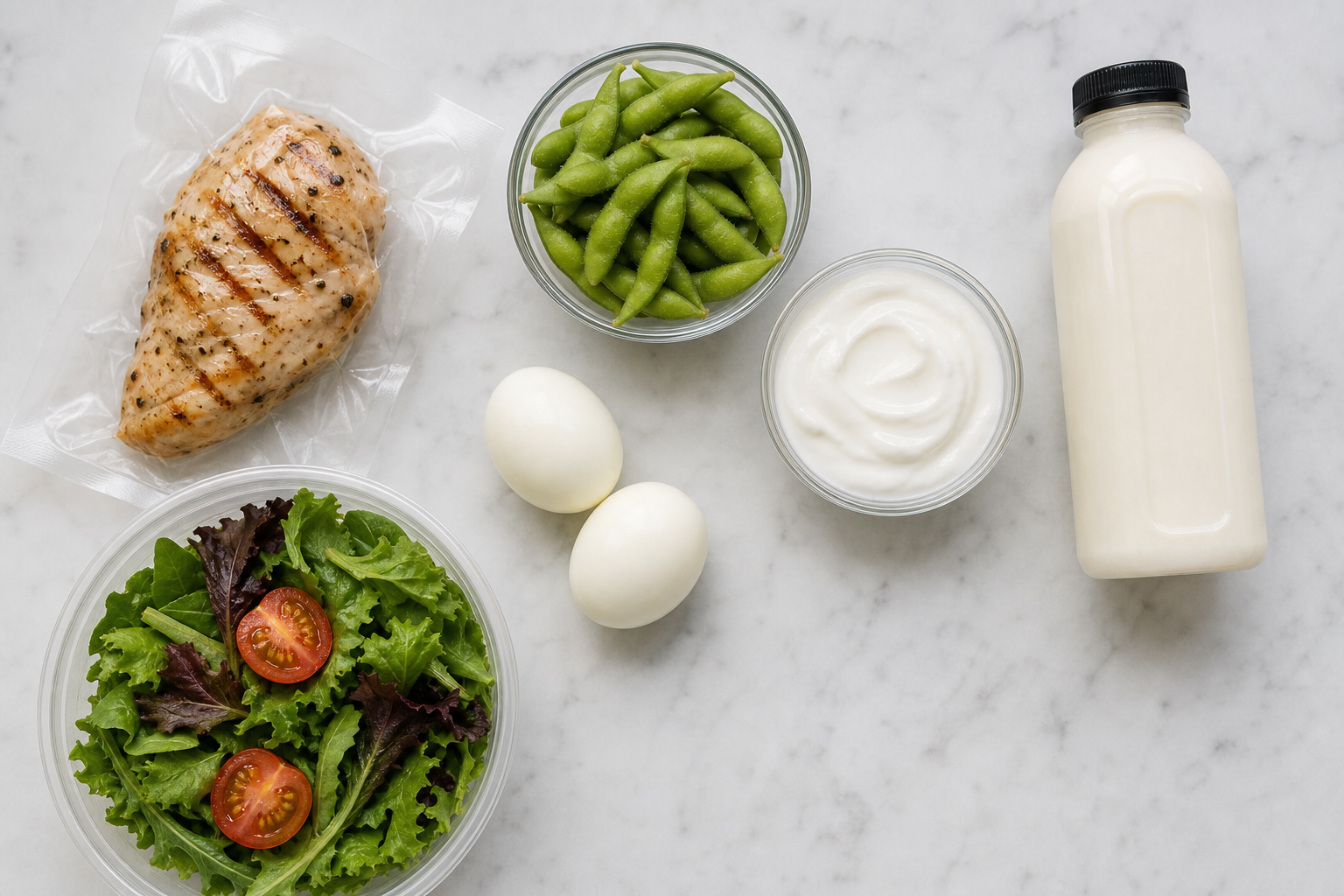
- Enough protein. Keeping protein high while in a deficit helps you hold on to muscle, so the weight you lose is more fat and less muscle. That keeps the underlying shape firmer as the fat layer comes down.
- Patience, because it is often last. The lower belly and pubic area are, for many people, among the last places to lean out. Slow change here is normal, not failure. Keep the overall deficit steady and this spot eventually follows.
That is genuinely the whole toolkit. Resistance training and walking help by making the deficit easier to sustain and protecting muscle, but they work because they support overall fat loss, not because they aim at the pubic area. If the lower belly is your bigger concern, the same logic is covered in how to lose lower belly overhang.
Eat well without the guesswork.
The 711 Diet is the physician-built system: which exact convenience-store products to grab, in which combo, at which calorie tier. No cooking, no tracking, no shame.
Get The 711 Diet Protocol →The behaviour and environment angle
Here is where most plans quietly fall apart, and it has nothing to do with willpower. A deficit you cannot keep up does nothing. The FUPA being "last to go" means you may need to hold a gentle deficit for months, and months are won or lost on your environment, not your motivation.
So the useful question is not "how do I find the discipline," it is "how do I make the easy choice the default." Stock the food you actually want to eat so that grabbing the right thing takes no decision. Build a few repeatable meals you do not have to think about. Set the deficit modest enough that you are not white-knuckling it, because a small deficit you keep beats a steep one you quit in three weeks. The body part you are worried about responds to the months, and the months respond to your setup. Fix the environment and the deficit takes care of itself.
The real takeaway
The FUPA is normal subcutaneous fat over your pubic bone. You cannot spot-reduce it, and the "FUPA exercises" cannot target it, because no exercise removes fat from a chosen spot. It comes down as part of overall fat loss, driven by a sustainable calorie deficit, supported by enough protein, and it often takes patience because the area is among the last to lean out. And if you have already lost the fat elsewhere and the spot stays soft, be honest with yourself: that may be loose skin, not fat, and that is a question for a doctor, not a diet.
What is FUPA?
FUPA stands for fat upper pubic area, the pad of normal subcutaneous fat over the pubic bone, on the region called the mons pubis. Everyone has some, and it stores fat the same way the rest of your body does.
Can you target FUPA fat specifically?
No. Spot reduction is a myth. Crunches and pelvic moves build muscle but do not strip the fat above them. The pubic-area fat shrinks only as part of overall fat loss across your whole body.
Is FUPA fat or loose skin?
It can be either. Before major weight loss it is usually fat, which responds to a calorie deficit. After major weight loss or pregnancy, some of it can be loose skin, which diet will not tighten.
Why is FUPA often the last area to go?
Where you lose fat first and last is set by genetics and hormones, not effort. For many people the lower belly and pubic area lean out last. That is normal, and it means patience and continued overall fat loss rather than a special trick.