How to Lose Man Boobs
Here is the straight answer. Most "man boobs" are chest fat, and chest fat comes off the same way as any fat: an overall energy deficit, not a special chest routine. But a firm disc under the nipple can be glandular tissue, which diet will not move and a doctor should look at.
If you searched how to lose man boobs, you have probably already been handed a wall of "chest fat burning" workouts and supplements. Most of it misses the one distinction that actually decides what will and will not work for you. So before any plan, let me get the medicine right, because it changes everything.
There is no shame in this, and I want to say that plainly. A fuller chest in men is common, it is often just fat distribution, and it does not mean you failed at anything. The useful move is not guilt. It is figuring out which of two things you are actually dealing with.
Fat or gynecomastia? The 30-second self-check
There are two different things people call man boobs, and they have completely different fixes.
The common one is pseudogynecomastia, which is just ordinary subcutaneous fat sitting over the chest. The chest is simply one of the places your body stores fat, the same as the belly or the lower back. This responds to overall fat loss.
The other is true gynecomastia, which is actual glandular breast tissue, not fat. It is driven by hormones, not calories, and losing weight will not make it disappear, because there is nothing about an energy deficit that shrinks a gland.
You can get a rough read with your own hand. Pinch the chest tissue gently between your fingers behind and around the nipple.
- Soft and even, feeling like the fat anywhere else on your body, spread across the chest: this points to fat (pseudogynecomastia). It moves with overall fat loss.
- A firm, rubbery, often tender disc sitting directly under and around the nipple, distinct from the softer fat around it: this points to glandular tissue (true gynecomastia). This is the one to take to a doctor. See a doctor promptly if it grows quickly, sits on one side only, feels hard or fixed rather than rubbery, or there is any nipple discharge, since those can point to causes beyond ordinary gynecomastia.
This is not a diagnosis, it is a sorting step. Many men have a mix of both. But knowing which one dominates tells you whether a diet is even the right tool, and it stops you grinding away at something that was never going to respond to it.
Why "chest workouts" build muscle but don't remove the fat
This is the most common trap, so let me be direct. Push-ups, the bench press and cable flyes build your pectoral muscle, which sits underneath the fat. They do not remove the fat layer sitting on top of it. Working a muscle hard does not burn the fat that happens to lie over it.
This is the spot-reduction myth, and it is one of the most persistent ideas in fitness. You cannot pick the spot fat comes off from. When you lose fat, your body draws it from stores all over, in an order set largely by your genetics, not by which muscle you trained that day. A thousand chest reps will not tell your body to release fat from your chest specifically.
There is even a version of this that backfires. If you build a bigger pec under a chest that still carries fat, the area can look fuller, not flatter. Muscle is useful and worth training. It is just not the lever that removes the fat on top. For the full mechanism, our guide on the spot reduction myth walks through why targeted fat loss does not exist.
What actually works for the fat type
If your self-check points to fat, the plan is unglamorous and it works. You lose fat overall, and the chest comes down with the rest of you. There is no chest-specific shortcut, and anyone selling one is selling the spot-reduction myth back to you.
Three levers do the real work.
- An overall energy deficit. Fat loss happens when you take in less energy than you burn, over time. This is the only thing that actually removes chest fat. If the calories-in versus calories-out idea is fuzzy, our CICO explained guide lays it out plainly.
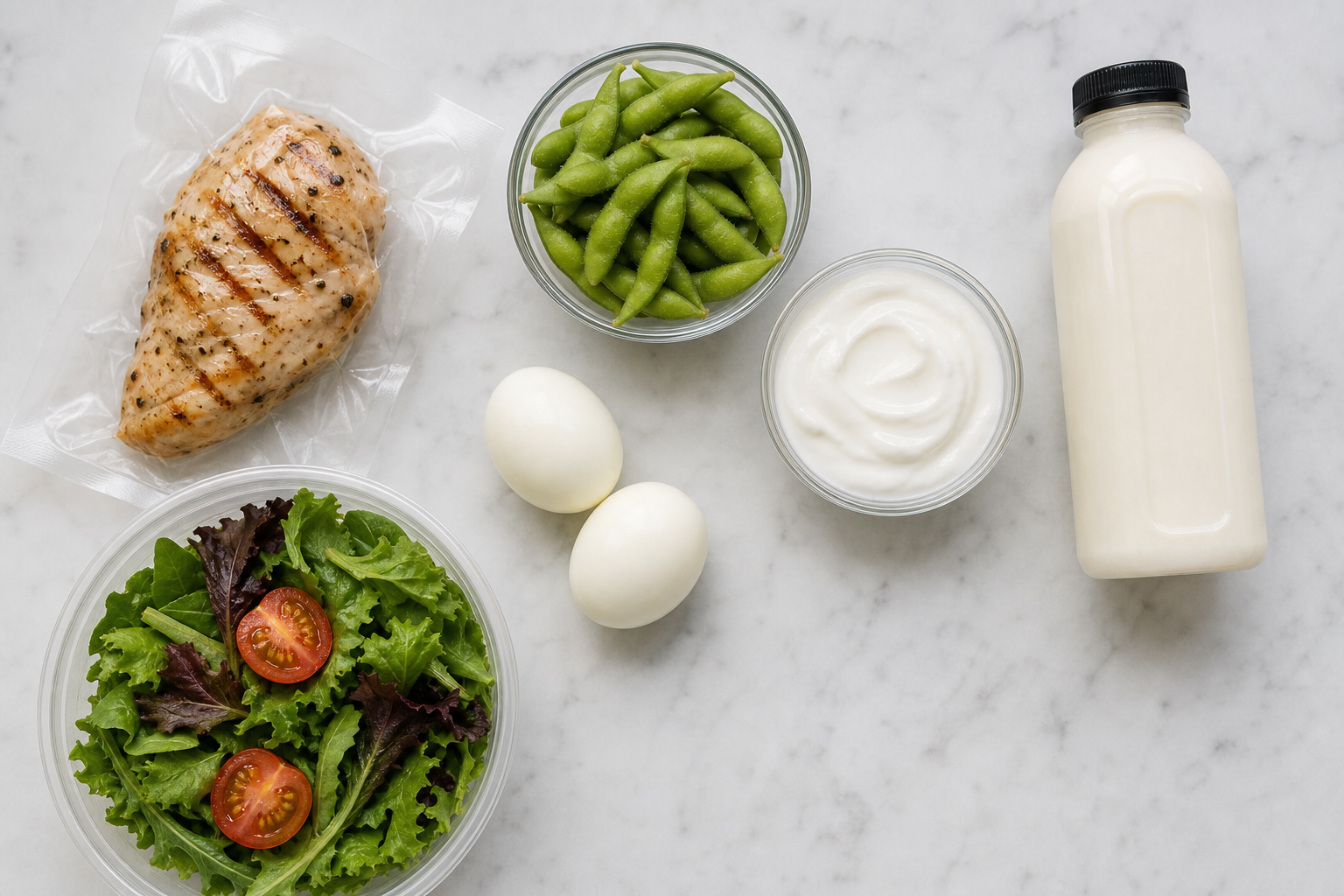
- Enough protein. Keeping protein high while you lose fat helps you hold onto muscle, so more of the weight you lose is fat rather than muscle. It also keeps you fuller, which makes the deficit easier to live with.
- Resistance training. Lifting, including chest work, is worth doing. Not because it spot-burns the area, but because it preserves and builds muscle while you lose fat, which is what leaves you looking firmer rather than just smaller. Train the chest for the muscle, lose fat for the look.
None of this is fast, and I would rather tell you that than promise a four-week chest transformation that the physiology cannot deliver. Chest fat is often one of the more stubborn areas, so it can be among the last to visibly shift. That is patience, not failure.
When to see a doctor
Most of the time this is fat and you can get on with it. But there are clear signals that it is worth a doctor's eyes rather than a diet.
See a doctor if you feel a firm one-sided lump, or if the change came on suddenly, or if the area is painful or tender, so a doctor can rule out true gynecomastia and rarer causes.
That single sentence covers the important flags. The reason it matters is that true gynecomastia is often driven by something specific that a diet cannot touch: certain medications, a hormonal imbalance, sometimes a shift that happens normally in puberty or later in life. A doctor can check whether a medication you take is the cause, look at the hormonal picture, and tell you whether what you are feeling is gland or fat. If it is established glandular tissue that bothers you, the options are medical, not dietary, and that is a conversation worth having rather than dieting against something that will not move.
Eat well without the guesswork.
The 711 Diet is the physician-built system: which exact convenience-store products to grab, in which combo, at which calorie tier. No cooking, no tracking, no shame.
Get The 711 Diet Protocol →The behaviour angle: change the environment, not your willpower
Here is the part most chest-fat articles skip, and it is the part that actually decides whether you lose the fat. The deficit above is simple to write down and hard to live, and that gap is almost never about willpower. It is about the environment you are deciding in.
Willpower is a bad plan because it runs out exactly when you need it, late in the day, tired, in front of whatever food is closest. So do not lean on it. Change the defaults instead. If the easy, in-reach option is a reasonable one, you will pick it without a fight. If the only food in the cupboard is the food you would have had to resist, you are negotiating with yourself ten times a day and losing.
This is the whole idea behind the 711 Diet: it removes the daily decision by telling you exactly what to grab. The point is the same whatever system you use. You do not need more discipline. You need a setup where the right choice is the easy one, so the deficit happens almost by default and you stop relying on a muscle that was always going to tire.
The real takeaway
Most man boobs are chest fat, and chest fat comes off when you lose fat overall, never from a special chest routine, because you cannot spot-reduce. Build muscle with training, lose the fat with an honest deficit and enough protein, and make it sustainable by fixing your environment instead of leaning on willpower. And do the self-check: if you feel a firm disc under the nipple, or anything sudden, painful or one-sided, see a doctor, because that is the version a diet was never going to fix.
Are man boobs fat or gynecomastia?
Usually fat. Most cases are pseudogynecomastia, ordinary fat over the chest that feels soft and even and responds to overall fat loss. True gynecomastia is glandular tissue that feels like a firm rubbery disc under the nipple, does not respond to dieting, and warrants a doctor.
Do chest workouts get rid of man boobs?
No. Chest workouts build the pec muscle underneath but do not remove the fat on top, because you cannot spot-reduce. The fat comes off when you lose fat overall through an energy deficit, not from training the chest.
When should I see a doctor about man boobs?
See a doctor if you feel a firm rubbery disc under the nipple, if it came on suddenly, if it is painful, or if it is clearly one-sided. A doctor can rule out gynecomastia and check for medication or hormonal causes that diet will not fix.