How to Lose Your Muffin Top
Here is the straight answer. A muffin top is just fat sitting over your waistband. You cannot target it. It shrinks when you lose fat overall, and the fastest lever is not a workout, it is changing what is easy to eat each day.
Most advice on the muffin top starts in the wrong place. It hands you a list of twists and side bends and tells you to feel the burn. That burn is real, but it is the muscle working, not the fat melting. Those are two different things, and confusing them is why so many people do hundreds of side bends and see no change at the waistband.
So let me reframe this the way I would in my own practice. The muffin top is not a discipline problem and not a stubborn special zone. It is normal soft tissue in a place where your waistband happens to press a line into it. The real question is not "which move burns it," it is "how do I make a calorie deficit the easy default in my day." That second question is where progress actually comes from.
What a muffin top actually is
A muffin top is subcutaneous fat, the layer that sits just under your skin, over the top edge of your trousers. It runs across the upper flanks, the sides, and the lower back. If that sounds familiar, it should: it is the same fat as love handles. The two names describe the same tissue from different angles. "Love handles" is the handful at your sides. "Muffin top" is what that same fat does when a tight waistband pushes it up and over the edge.
That detail matters. The shape you see in the mirror is partly fat and partly your clothes. A waistband that cuts in will create a clean overhang line even on a fairly lean body, the same way a tight sock leaves a mark on your calf. So part of "losing the muffin top" is fat loss, and part of it is simply not wearing trousers that bisect the softest part of you. I will come back to that, because it is the most honest and most ignored point in this whole topic.
Why side bends and waist trainers do not burn it
This is the core misunderstanding, so I want to be plain about it. You cannot choose where your body burns fat. There is no exercise that pulls fat off the exact spot you are working. This is called the spot-reduction myth, and it is one of the most consistently debunked ideas in the whole fitness world. If you only read one related piece, read our guide to the spot-reduction myth, because it explains the mechanism in full.
Here is the short version. When you do side bends, twists, or oblique crunches, you are training the oblique muscles that sit underneath the fat. Those muscles get stronger and a little firmer. That is genuinely useful for your core, your posture and your back. But the fat layer sitting on top of them does not get used as fuel just because the muscle below it is working. Fat is released from all over your body, based on an overall energy deficit and your own genetics, not from the patch nearest the working muscle.
Waist trainers are the same story with a cosmetic twist. They squeeze the area while you wear them, so the line looks smoother for a few hours. The moment you take it off, nothing has changed underneath. No garment burns fat. If anything, building strong obliques under a still-present fat layer can make the area look slightly broader, not slimmer. So train your core because a strong core is worth having, not because you expect it to erase the overhang. It will not.
What actually works: the deficit, protein, and walking
Losing a muffin top is losing fat overall, and there is no version that skips the part where you eat slightly less energy than you burn. That is the engine. Everything else is about making that engine easy to keep running. If you want the mechanism behind it, our calories in, calories out explainer covers how the deficit really works.
Three levers do most of the work:
- An overall calorie deficit. This is non-negotiable, because it is the only thing that releases stored fat. The goal is a modest gap, not starvation. A deficit you can hold for months beats an aggressive one you abandon in two weeks.
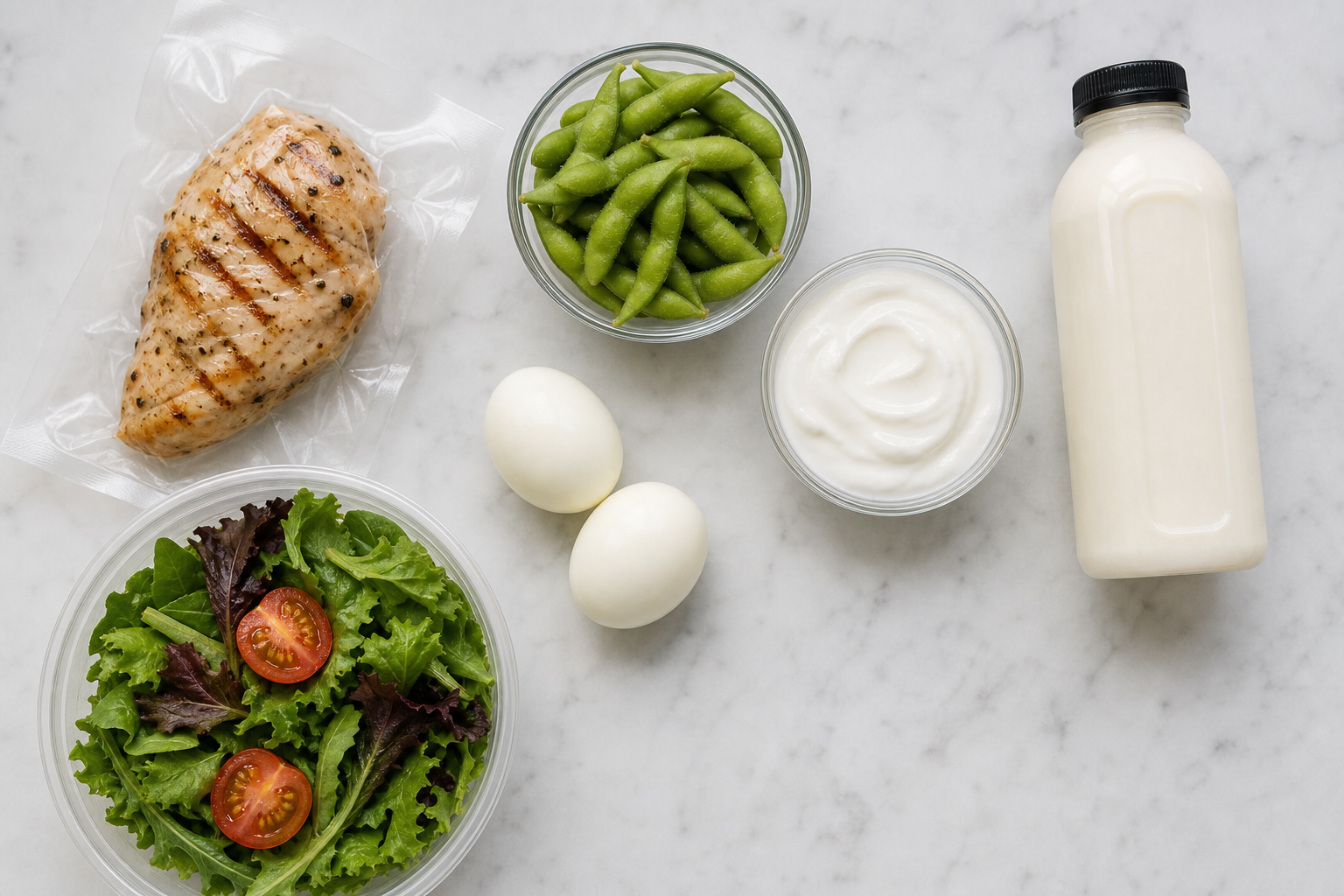
- Enough protein. Protein keeps you full, protects your muscle while you lose fat, and costs more energy to digest than carbs or fat. Build meals around a clear protein source and most of the portion control happens on its own.
- Walking and general daily movement (NEAT). The calories you burn just living, walking, standing, fidgeting, add up to far more than most single workouts. A daily walk is the most underrated fat-loss tool there is, and it is gentle enough to actually keep doing.
Notice what is not on that list: a special ab routine. You can do core work for strength, but it is not how the fat comes off. The waistband shrinks as a side effect of the whole body getting leaner.
The honest part about your clothes
I promised I would come back to this, because no one selling you a workout wants to say it. A meaningful amount of what reads as "muffin top" is the fit of your waistband, not the amount of fat you carry.
Low-rise trousers that sit at the narrowest point press fat upward and create the spillover. A waistband that sits a little higher, at or just above the soft part, holds that tissue instead of bisecting it, and the overhang largely disappears. This is not a trick to hide a problem. It is recognising that part of the "problem" was a line your clothes drew on you. Try the same body in two different rise heights and you will see a different silhouette with zero fat lost. That is worth knowing before you commit to months of effort over something a better-fitting pair of jeans partly solves today.
A realistic timeframe
Because the muffin top only moves with overall fat loss, the timeline is the same as any honest fat-loss timeline: months, not weeks. At a moderate deficit, most people lose somewhere around half a kilo to a kilo per week, and the waist is often one of the later places to visibly change, because your body, not your willpower, decides the order fat comes off in.
Two things will make the early days confusing. First, daily weight swings from water and food in your gut have nothing to do with fat and can hide real progress for a week or more. Second, the visible overhang shifts partly with clothing fit and bloating from day to day. So judge progress over weeks, with the same waistband and ideally a tape measure, not by the mirror on any single morning. Slow and boring is what working actually looks like here.
Make the deficit the easy default.
The 711 Diet is the physician-built system: which exact convenience-store products to grab, in which combo, at which calorie tier. High protein, no cooking, no tracking. The deficit happens because the food is already chosen for you.
Get The 711 Diet Protocol →The behaviour and environment angle
Here is where I differ from most fitness advice. The reason a deficit fails is almost never a lack of willpower. It is the environment. If high-calorie food is the easiest thing to reach when you are tired, you will eat it, and that says nothing about your character. Willpower is a poor tool for a problem that shows up twenty times a day.
So the real work is upstream of the moment of temptation. Stock the easy, visible options so the high-protein choice is the path of least resistance. Decide your default meals in advance so a tired evening is not a fresh negotiation. Keep the daily walk on a fixed peg in your day, like after lunch, so it does not depend on motivation. Each of these removes a decision instead of asking you to win one. Do that consistently and the deficit takes care of itself, and the muffin top shrinks quietly in the background, on its own schedule, without you ever doing a single side bend to chase it.
What exactly is a muffin top?
It is subcutaneous fat sitting just under the skin over your waistband, around the upper flanks, sides and lower back. It is the same fat as love handles, named for the way it spills over a tight waistband. Normal soft tissue, not a separate problem area.
Can side bends and twists burn off a muffin top?
No. Side bends, twists and waist trainers cannot burn fat from the spot they target. They build the oblique muscles underneath, which is useful, but they do not remove the layer of fat on top. Fat comes off your whole body in an overall deficit, not from the muscle you happen to be working.
How long does it take to lose a muffin top?
There is no fixed timeline, because it tracks your overall fat loss. At a moderate deficit most people lose roughly half a kilo to one kilo per week, and the waistline often changes more slowly than expected. Months, not weeks. Some of the day-to-day change you see is water and clothing fit, not fat.