Free tool
Accurate TDEE Calculator
Your TDEE is your maintenance: roughly your BMR multiplied by how much you move. Eat below it to lose weight, around it to hold, above it to gain. This calculator uses the Mifflin-St Jeor formula, the same one most clinicians use.
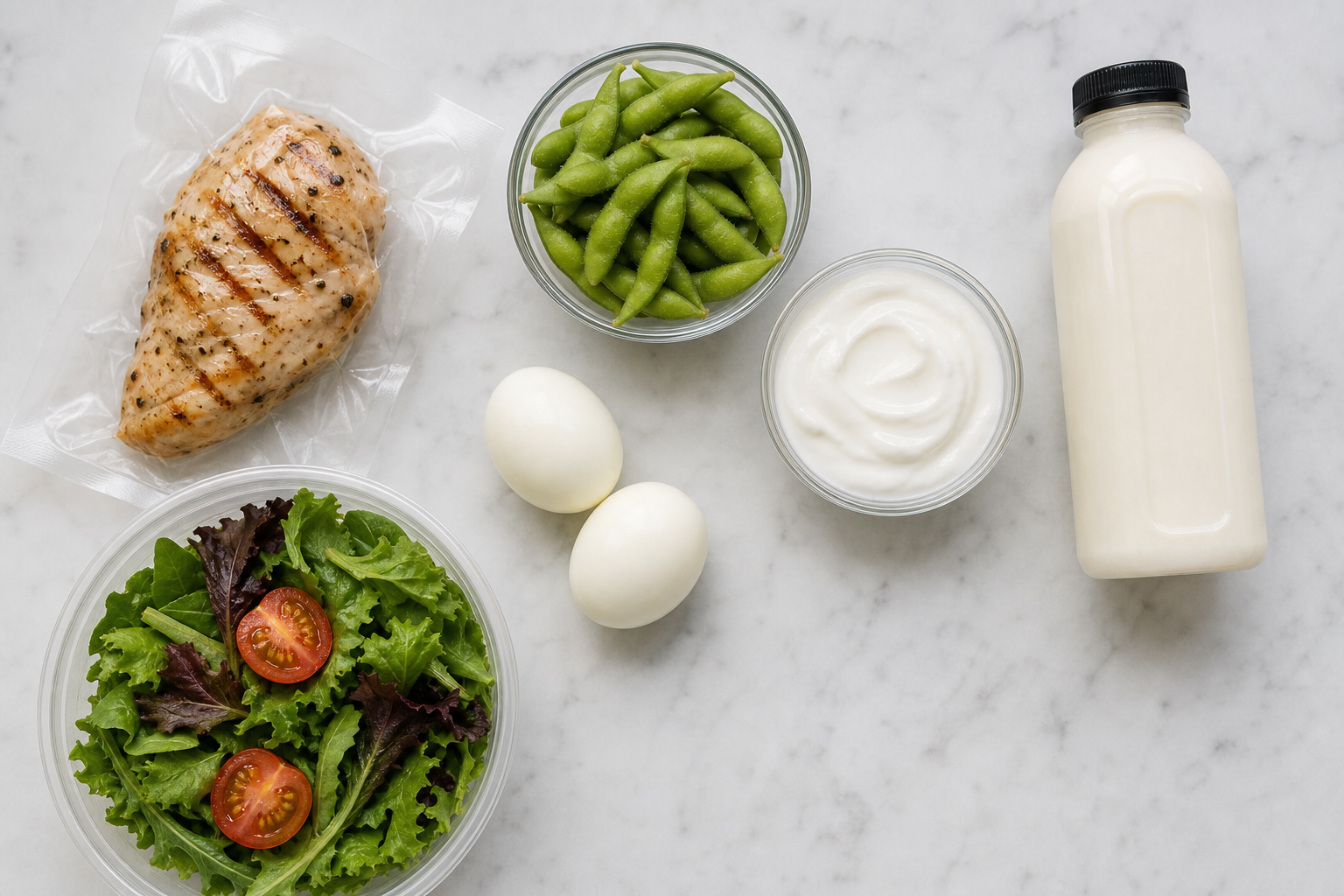
Accurate TDEE Calculator
Enter your stats and activity level. You get maintenance calories, a deficit table, and a protein target. No tracking, no login needed.
No login
Maintenance (TDEE)2,720BMR 1,755 kcal × 1.55 activity
| Cut | Daily calories | Approx. loss |
|---|---|---|
| Mild (-300) | 2,420 | ~0.3 kg/week |
| Moderate (-500) | 2,220 | ~0.5 kg/week |
| Aggressive (-750) | 1,970 | ~0.7 kg/week |
Protein target: 128 to 176 g/day (1.6 to 2.2 g per kg, to protect muscle in a deficit)
One kilogram of body fat holds roughly 7,700 kcal. That is a rule of thumb, so real-world loss varies with water, food volume, training, and sleep. Re-check after two to three weeks and adjust.
The honest answer first: there is no single perfect TDEE number, because your real daily burn moves around. But you do not need perfect. You need a sensible starting estimate, a deficit you can actually repeat, and the patience to adjust it after a couple of weeks. The calculator above gives you all three. Below is what each part means, in plain language.
What is TDEE?
TDEE stands for total daily energy expenditure. It is every calorie your body spends in a day: keeping you alive at rest, digesting food, moving around, and any training you do. If you eat at your TDEE, your weight holds. Eat under it and you lose. Eat over it and you gain. That is the entire model, and almost everything else is detail.
Most of your TDEE is not exercise. It is your basal metabolic rate, the energy you would burn lying in bed all day. For a typical adult, BMR is the largest single chunk, often around 60 to 70 percent of the total. The rest comes from movement and the small cost of digesting food. This matters because people overestimate how much their workouts add and underestimate how much ordinary daily movement, walking, fidgeting, standing, actually counts.
How this calculator works (Mifflin-St Jeor)
This tool uses the Mifflin-St Jeor equation, which is the one most dietitians and physicians reach for because it tends to be the most accurate of the common formulas for the general population. It estimates your BMR from four inputs: sex, weight, height, and age.
The formula is simple enough to read:
- Men: BMR = (10 × kg) + (6.25 × cm) - (5 × age) + 5
- Women: BMR = (10 × kg) + (6.25 × cm) - (5 × age) - 161
Then your BMR is multiplied by an activity factor to estimate TDEE: sedentary 1.2, light 1.375, moderate 1.55, active 1.725, and very active 1.9. So a moderately active person whose BMR is 1,755 lands at about 2,720 calories of maintenance. From there, subtracting 300, 500, or 750 calories gives you the three deficit tiers in the table.
The math is clean. The honest caveat is that the activity multiplier is a judgment call, not a measurement, which is where most of the error lives. More on that below.
What deficit should I pick?
Here is the straight answer: slower is usually better, even though it feels like less. A mild deficit of about 300 calories produces roughly 0.3 kg of loss per week. A moderate deficit of about 500 calories produces roughly 0.5 kg. An aggressive 750-calorie deficit pushes toward 0.7 kg. These come from the rule of thumb that a kilogram of fat stores around 7,700 calories, so a 500-calorie daily gap over a week is about 3,500 calories, close to half a kilo.
Bigger is not better here. A large deficit looks efficient on a spreadsheet and then collapses in real life, because hunger climbs, training quality drops, and one chaotic weekend erases the week. A smaller deficit you can hold for three months beats an aggressive one you abandon after ten days. This is the behavior-change part: the best deficit is the one that survives your actual life, not the one that looks most impressive on day one.
Two guardrails. First, do not eat below your BMR for long stretches. Second, keep your protein high while you cut. Protein is what tells your body to lose fat rather than muscle, and it keeps you fuller, which quietly makes the deficit easier to hold without a willpower fight. That is why the calculator shows a protein target of 1.6 to 2.2 grams per kilogram of body weight: a practical, evidence-based range for someone who wants to lose fat and keep their shape.
Why your real TDEE may differ
Treat the number as a hypothesis, not a verdict. The single biggest source of error is the activity multiplier. Two people with identical stats can have genuinely different burns because one walks 9,000 steps a day without thinking about it and the other sits for fourteen hours. Most people, when honest, sit somewhere lower than they guessed, which is why so many "I eat 1,500 and do not lose" stories are really estimation problems, not metabolism problems.
The second trap is your fitness tracker. Watches and machines are reasonable for heart rate and steps, but they systematically overestimate calories burned, sometimes badly. If you eat back the calories your watch says you torched, you can quietly erase your whole deficit. Do not add tracker-burned calories on top of this estimate. Let the formula and the scale do the talking instead.
Other things that move the real number: your weight as it changes (a lighter body burns less, so the deficit shrinks over time), sleep, stress, medications, illness, and for women the menstrual cycle, which swings water weight enough to hide fat loss for a week. None of this breaks the model. It just means you check the trend over two to three weeks and nudge your intake if the scale is not moving the way the math predicted.
The honest part: the number is a starting point, adherence is the work
I will not pretend a calculator solves the problem. It gives you a target, and a target is useful, but the target was never the hard part. Hitting it day after day is. Most people do not fail because they picked the wrong multiplier. They fail because deciding what to eat, every meal, while tired, busy, or traveling, is exhausting, and exhaustion loses to convenience every time.
So the practical move is to make the deficit boring and repeatable. Pick a small number of simple foods you actually like, that hit your protein, and that you can grab without a recipe or a cooking session. When the right choice is also the easy choice, adherence stops being a willpower test. That is the whole philosophy of this site: do not white-knuckle a perfect plan, build an environment where the easy option is already the one that fits your numbers.
If the scale stalls for two to three weeks of honest eating, your real TDEE is lower than the estimate. Drop about 150 to 200 calories and reassess. If you are losing faster than you feel good about, add some back. The calculator gets you in the right neighborhood. Your own trend line is the precise instrument.
For the practical side of actually hitting the deficit, the easiest setup is simple, repeatable convenience food, the same reason a realistic monthly weight-loss range beats a heroic crash diet. And if you are eating in a deficit but the scale will not move, read why a calorie deficit is not losing weight before you assume the math is broken. Both come back to the same lesson: the plan has to be one you can repeat, and the food has to be easy enough that tired-you still picks it.
Now turn the number into food.
A target is easy. Hitting it every day, while tired and busy, is the hard part. The 711 Diet turns this number into exact convenience-store picks so you actually hit it: which products, in which combo, at which calorie tier. No cooking, no tracking.
See The 711 Diet Protocol →FAQ
How accurate is a TDEE calculator?
Mifflin-St Jeor is accurate within roughly 10 percent for most people. The biggest error is the activity multiplier, because daily movement is hard to estimate honestly. Use the number as a starting point, then adjust after two to three weeks based on your scale trend.
What deficit should I use to lose weight?
About 300 calories under maintenance gives roughly 0.3 kg per week, 500 gives roughly 0.5 kg, and 750 gives roughly 0.7 kg. Slower is usually more sustainable and easier to hold when your protein stays high.
How much protein should I eat while cutting?
A practical range is 1.6 to 2.2 grams per kilogram of body weight per day. Higher protein protects muscle in a deficit and keeps you fuller, which makes the deficit easier to hold.
Estimates are for healthy adults and are not medical advice. Mifflin-St Jeor and the 7,700 kcal per kilogram figure are rules of thumb. Your real maintenance can differ, so verify against your own weight trend over two to three weeks.