Calorie Deficit but Not Losing Weight? Here's Why
Here's the straight answer. In almost every real case it is one of three things, in this order: you are not actually in the deficit you think, water weight is masking real fat loss, or you genuinely stalled and need a small adjustment. The first one is by far the most common.
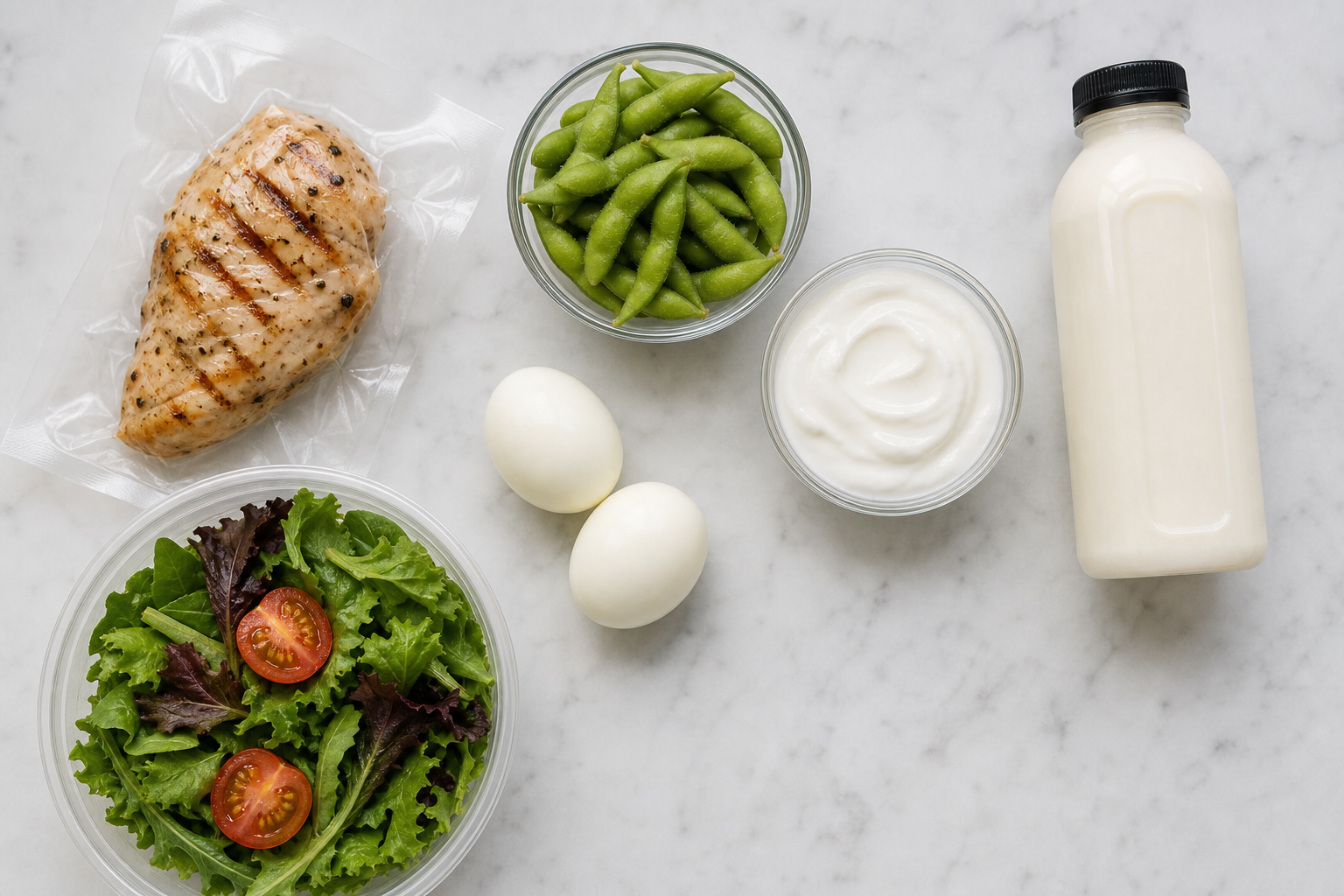
If you searched not losing weight but definitely in a calorie deficit, you want a real answer, not a pep talk about discipline. So here it is. The laws of physics did not pause for your body. If fat is not coming off over weeks, then one of three things is true, and they are not equally likely. Most of the time it is the first one.
I'll go through all three in order, then give you the exact thing to do about each. None of this is a willpower problem. It is almost always a measurement problem or a water problem, and both are fixable once you can see them clearly.
1. You are not actually in the deficit you think
This is the cause in the large majority of cases, and it is nobody's fault. Tracking is genuinely hard, and the gap between what people log and what they eat is well documented. People can underestimate their intake by several hundred calories a day without lying to anyone, including themselves.
Here are the usual leaks, roughly in order of how often they show up:
- Portion estimation: "one tablespoon" of oil is often two or three. Eyeballed peanut butter, cheese, rice and pasta are the classic blind spots. A food scale for one week tells you more than a month of guessing.
- Weekend gaps: five tight weekdays plus two loose weekend days can erase the whole deficit. A 500-calorie weekday deficit times five is 2500. Two relaxed weekend days at plus 1500 each is 3000. Net for the week: a small surplus, and the scale agrees.
- Liquid calories: juice, the oat-milk latte, alcohol, smoothies, the "just a splash" in coffee. These slide past because they do not feel like eating.
- "Healthy" calorie-dense foods: olive oil, nuts, nut butter, avocado, granola, dried fruit, protein bars. All fine foods. All very easy to under-count because the health halo makes the portion feel smaller than it is.
- Bites, licks and tastes: the untracked handful, the kids' leftovers, the cooking spoon. Each one is small. Across a day they add up.
The honest reframe: you are not failing at the diet. The diet is just bigger than your estimate of it. That is a measurement gap, and measurement gaps close fast once you look.
2. Water weight is masking real fat loss
This one is sneaky because you can be losing fat right now and see nothing on the scale, sometimes for two or three weeks. Body weight is mostly water, and water moves around far faster and in larger amounts than fat ever does. A daily swing of one to two kilograms is normal and means nothing about fat.
What pushes water up and hides the fat you are actually losing:
- Sodium and carbs: a saltier day or more carbs pulls water into your tissues. Each gram of stored carbohydrate (glycogen) holds roughly three grams of water with it, so a higher-carb day shows up as scale weight that is purely water.
- New or harder training: starting a program or a tough session triggers a short-term inflammatory repair response. Muscles hold extra water while they recover. You are doing the right thing and the scale punishes you for it for a week or two.
- Cortisol and stress: poor sleep, work stress and aggressive dieting raise cortisol, which makes you retain water. The fat loss is happening underneath, but you cannot see it through the water.
- Menstrual cycle: for many women the scale climbs one to two kilograms in the days before a period from water alone, then drops again. Comparing the same point across two cycles is far more honest than week to week.
- The whoosh: fat cells that have released their fat can briefly fill with water, so the cell is empty of fat but the scale has not moved. Then the water dumps, often after a good night's sleep, and the scale drops a chunk overnight. That sudden drop is not magic. It is the fat loss that was already there finally becoming visible.
So a flat scale for one or two weeks is not evidence that nothing is happening. It is usually water sitting on top of real progress.
3. You genuinely stalled and need a small adjustment
This is the least likely of the three, and I put it last on purpose, because people reach for it first and it is rarely the real answer. Yes, your body adapts as you lose weight. A smaller body burns fewer calories, and there is a real effect called adaptive thermogenesis where your metabolism dips a little beyond that.
But it is smaller than the internet suggests. We are talking a modest reduction, not a metabolism that has "shut down" or "gone into starvation mode." Nobody stays the same weight while honestly eating 1200 calories. If the scale has been truly flat for three or more weeks and you have ruled out the first two causes with tight logging, then your deficit has simply shrunk as you got lighter, and you make a small correction. Not a drastic one.
The fix here is a trim, not a crash: roughly 100 to 200 fewer calories a day, or a bit more daily movement, or both. The instinct to slash intake hard usually backfires, because it makes adherence worse and stress higher. Small, sustainable, boring.
What to actually do
You do not need to do all of this. You need to find out which of the three you are dealing with, in order. Work down the list.
- Weigh the trend, not the day. Weigh most mornings under the same conditions and look only at the weekly average over two to three weeks. One morning tells you about water. The trend line tells you about fat. If the trend is drifting down, you are winning, ignore the daily noise.
- Tighten logging for exactly one week to find the leak. Use a scale, log everything including bites and liquids, and do not skip the weekend. One honest week almost always exposes the gap. You are not doing this forever, just long enough to recalibrate your eye.
- Keep protein high. Aim for roughly 1.6 to 2.2 grams per kilogram of body weight per day. Protein protects muscle in a deficit, keeps you full, and makes the whole thing easier to stick to. Our TDEE calculator gives you a realistic starting calorie and protein target instead of a guess.
- Be patient through the water masking. If your logging is honest and the trend is flat for only a week or two, change nothing yet. Give the water time to clear. Most "stalls" resolve on their own once you stop reacting to a single morning.
For a sense of what real, healthy progress looks like over weeks, see how much weight you can lose in a month. And if the scale is jumping around and stressing you out, water weight explained walks through exactly why, so a heavy morning stops feeling like failure.
Stop guessing what you ate.
The 711 Diet is the physician-built system: which exact 7-Eleven products to grab, in which combo, at which calorie tier. The portions are decided for you, so the deficit is real and you can actually see it on the scale.
Get The 711 Diet Protocol →The honest bottom line
A flat scale in a "deficit" is not a sign that your body is broken or that you lack discipline. It is a signal, and the signal almost always points at measurement or water, in that order. Find the leak with one tight week. Judge fat loss over two to three weeks, not single mornings. Keep protein high and stay patient through the water. Only after all of that, if you are still truly stuck, make a small adjustment. The system works. You just need to be able to see it working.
Why am I not losing weight in a calorie deficit?
In almost every real case it is one of three things, in order: you are not actually in the deficit you think (tracking and portion errors, weekend gaps, liquid calories, calorie-dense "healthy" foods), water weight is masking real fat loss, or you genuinely stalled and need a small adjustment. Start with the first, because it is by far the most common.
How long should I wait before the scale moves?
Judge fat loss over two to three weeks, not day to day. Daily swings of one to two kilograms from water, sodium, carbs and your cycle are normal and mean nothing. Watch the weekly average trend line, not single mornings.
Has my metabolism stopped working?
Almost never. Adaptive thermogenesis is real but smaller than people think, a modest dip, not a shutdown. A true stall after weeks of honest tracking is fixed by trimming about 100 to 200 calories a day or adding movement, not by eating less and less.