How Long Does It Take to Lose 20 Pounds?
Here is the straight answer. At a safe pace of about 1-2 lb (0.5-1 kg) per week, 20 lb takes roughly 10-20 weeks for most people. Heavier starting weight tends to be faster, and the first week or two can look quick because of water before fat loss settles into the real trend.
Twenty pounds is a clean, motivating target, and it is also where people get the timeline wrong in both directions. Some expect it in a month, get discouraged, and quit. Others assume it will take a year and never start. The truth sits in the middle and depends mostly on one thing: how fast you lose per week without making your life miserable.
The healthy rate is about 0.5-1% of body weight per week, which for most people is 1-2 lb. Divide 20 lb by that pace and you get a range, not a single magic date. So instead of guessing, set your numbers in the calculator below, then read why the timeline bends the way it does.
Set your current weight, unit, and weekly pace. It estimates weeks to lose 20 lb and your target date.
A good default is 0.5-0.75% of body weight per week. Push toward 1% only if hunger, training, sleep, and mood still stay normal.
The realistic timeline
Twenty pounds at 1-2 lb per week is a 10-20 week job, or roughly 2.5 to 5 months. That is the honest range, and the boring version is the one that works. The lower end (10-12 weeks) is realistic if you start heavier and stay consistent. The upper end (16-20 weeks) is normal if you are closer to your goal weight or you want a gentler deficit you can actually live with.
| Starting weight | Good weekly pace | Time to lose 20 lb |
|---|---|---|
| 160 lb / 73 kg | 0.8-1.6 lb | ~13-20 weeks |
| 200 lb / 91 kg | 1.0-2.0 lb | ~10-18 weeks |
| 250 lb / 113 kg | 1.3-2.5 lb | ~9-15 weeks |
One thing to expect: the first week often looks dramatic. Eat fewer carbs, less salty takeout, and smaller portions, and you can drop several pounds of water before any fat moves. That early jump is real on the scale but it is not 4 lb of fat. Judge the trend across 2-4 weeks, not one good Monday morning.
Why heavier people lose faster at first
A bigger body burns more calories at rest and during movement, so the same effort opens a larger deficit. There is more to lose, and the early water shift is also larger. At 250 lb, a 1% weekly rate is 2.5 lb. At 150 lb, that same 1% is only 1.5 lb. Both people are doing equally well, the scale just rewards the heavier one with a bigger number.
This is why fixed promises like "20 lb in 8 weeks for everyone" are sloppy. Two people can run the identical plan perfectly and finish weeks apart. As you get lighter, your own pace slows a little too, which is normal and not a sign the plan stopped working. The percentage stays steadier than the raw pounds.
What makes it faster or slower
The size of your calorie deficit is the main lever, but the scale has a lot of moving parts. Here is what actually shifts the timeline:
- Deficit size: Bigger deficit, faster loss, up to the point where hunger and energy fall apart. Sustainable beats savage.
- Protein: Higher protein protects muscle and keeps you fuller, so more of the 20 lb is fat.
- Steps and daily movement: Walking quietly raises expenditure without spiking hunger the way hard cardio can.
- Strength training: Not for the calorie burn, but to keep muscle while fat comes off.
- Sleep: Short sleep raises cravings and makes normal portions feel unsatisfying.
- Alcohol: Adds calories, worsens sleep, and degrades late-night food decisions.
- Sodium and carbs: These swing water weight by several pounds in either direction and can hide real progress for a week.
- Consistency: Five good days and two chaotic days often average out to maintenance. The chaotic days are where timelines quietly double.
If the scale stalls for a couple of weeks while everything else looks right, that is usually water or a small drift in portions, not a broken metabolism. I wrote a full breakdown in calorie deficit but not losing weight. To set your numbers honestly in the first place, run the TDEE calculator so your deficit is built on your real maintenance, not a guess.
Doing it without it ruining your life
The fastest 20 lb is not the one you force, it is the one you can repeat for three or four months without your food life becoming weird. That is the ohne-Verzicht idea: fewer decisions, not less living. The plan that survives airports, hotel rooms, late work nights, and convenience stores is the plan that finishes.
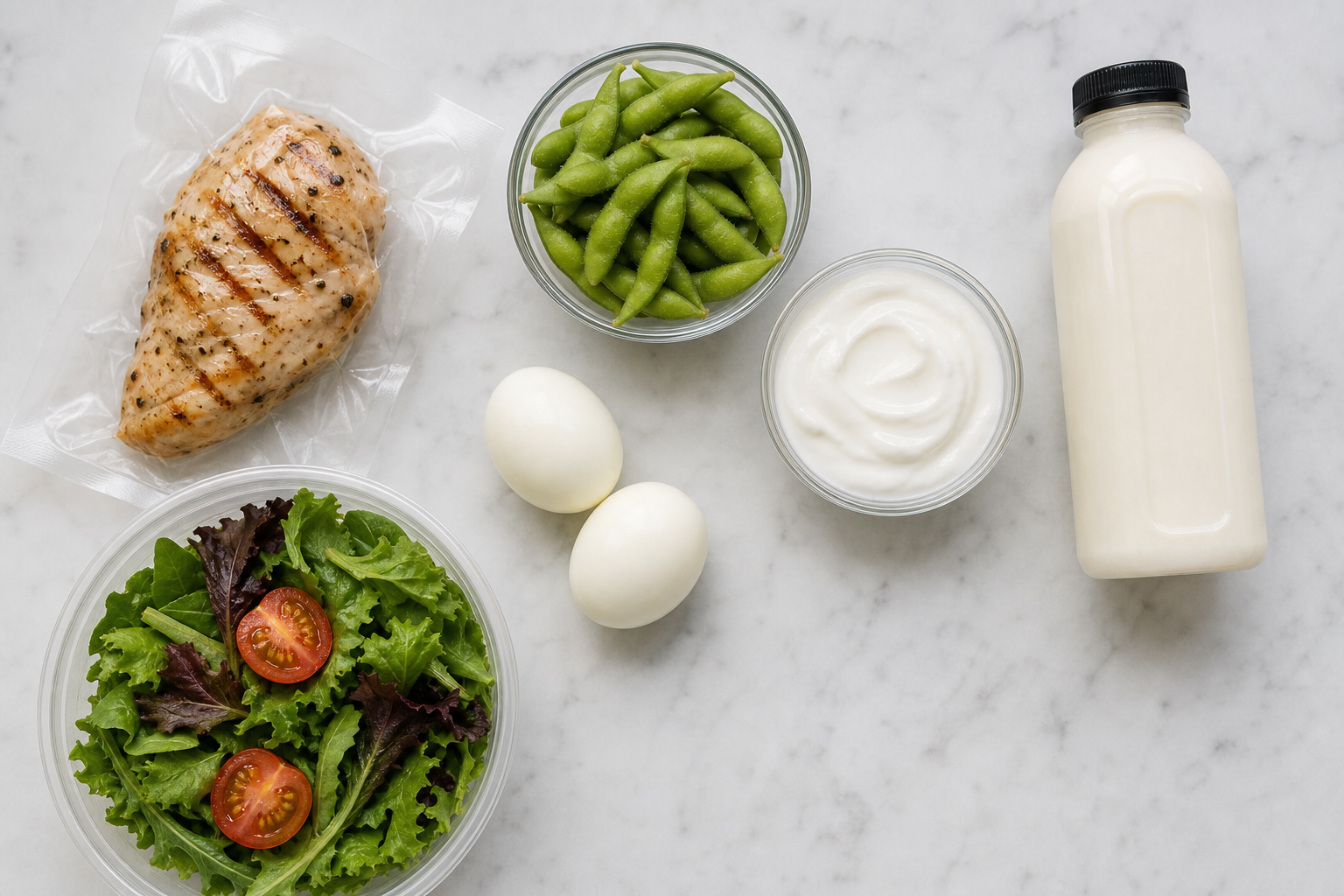
Two things carry most of the result. First, protein at every meal, roughly 1.6-2.2 g per kg of body weight per day. That keeps you full and protects muscle so the 20 lb leaves as fat. Second, boring defaults you can grab anywhere: grilled chicken, eggs, yogurt, tuna, edamame, high-protein milk. When hungry and tired, you will not freestyle a good choice, so make the good choice the easy one. If you want the realistic monthly picture before you commit, how much weight can you lose in a month sets the expectations.
Build the environment first and the discipline takes care of itself. A clean fridge, a default lunch, and a step floor beat motivation every time, because motivation is the thing that runs out on week three.
Stop deciding what to eat.
The 711 Diet is the physician-built system: which exact 7-Eleven products to grab, in which combo, at which calorie tier. No cooking, no tracking, just a deficit you can repeat for the full 20 lb.
Get The 711 Diet Protocol →FAQ
How long does it realistically take to lose 20 pounds?
About 10-20 weeks at a safe 1-2 lb per week. A heavier starting weight pushes you toward the faster end, and the first week or two may look quick because of water weight before the steady fat-loss trend takes over.
Can you lose 20 pounds in a month?
It can show on the scale, especially from a high starting weight or a big water drop, but 20 lb of real fat in four weeks is not the normal target. It usually needs an aggressive setup that is hard to repeat and easy to rebound from.
How much protein do I need while losing 20 pounds?
Around 1.6-2.2 g of protein per kg of body weight per day while in a deficit. It protects muscle, keeps you fuller, and helps the 20 lb come off as fat rather than as a softer, smaller version of the same body.
Numbers are practical estimates for adults. Body size, deficit, protein, training, sleep, travel, and water weight can move the scale faster or slower than the trend.